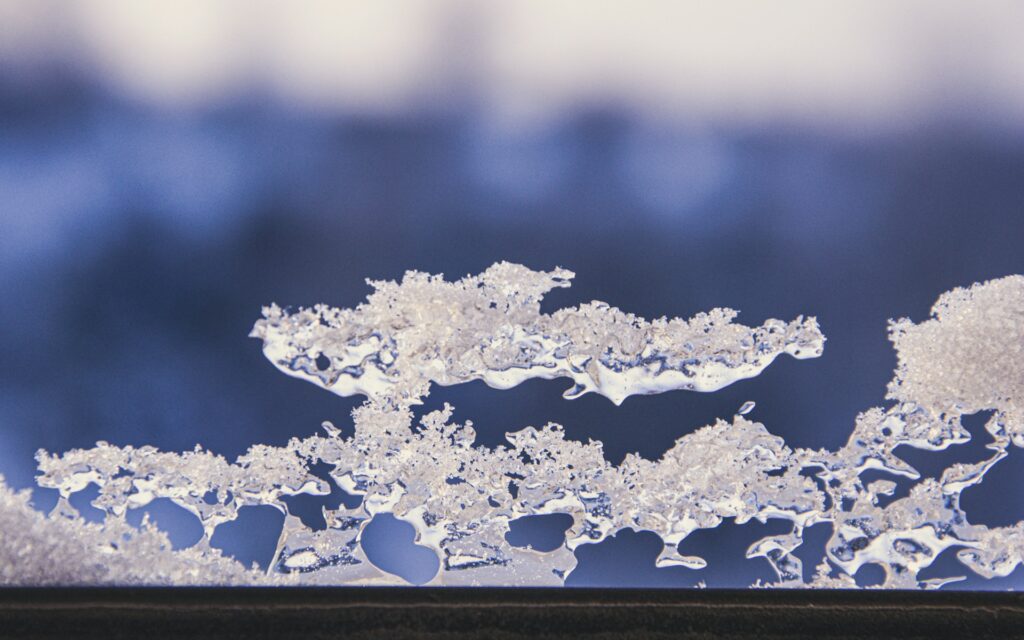
Frost Forming Inside Windows at -20 C: Set Humidity by Weather
At -20 C, a humidity level that was harmless in mild weather may condense on colder glass. Use the current outdoor temperature, a hygrometer, and actual window response to adjust moisture – not one year-round percentage.
Alongside the specific checks in Frost Forming Inside Windows at -20 C: Set Humidity by Weather, review ice on the inside of windows and compare that guidance with measured conditions in this home.
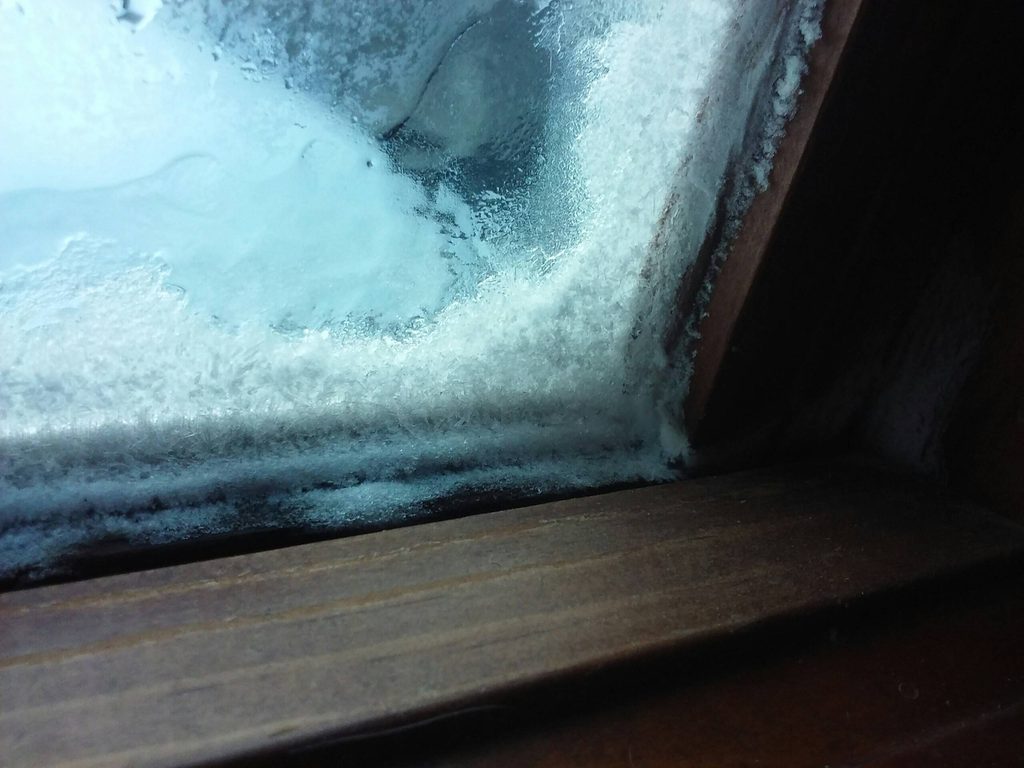
Why the frost pattern matters
Treat the first cold morning as evidence collection, not a verdict. Frost does not begin with the same variable in every home. Outdoor temperature sets the thermal load; glazing, frame, spacer, air leakage, coverings, room heat, and installation shape the interior surface temperature; occupants and ventilation set the moisture load. Diagnosis means keeping those groups separate long enough to test them.
Relative humidity can be healthy in a general sense and still be too high for a cold window on a particular night. Health Canada gives a broad 30-to-50-percent range but advises lowering humidity if condensation appears in cold weather. Natural Resources Canada’s examples show why the acceptable ceiling changes with outdoor temperature and window efficiency.
Evidence to collect:
- Frost begins only below a repeatable outdoor temperature.
- Humidifier setting has not changed with weather.
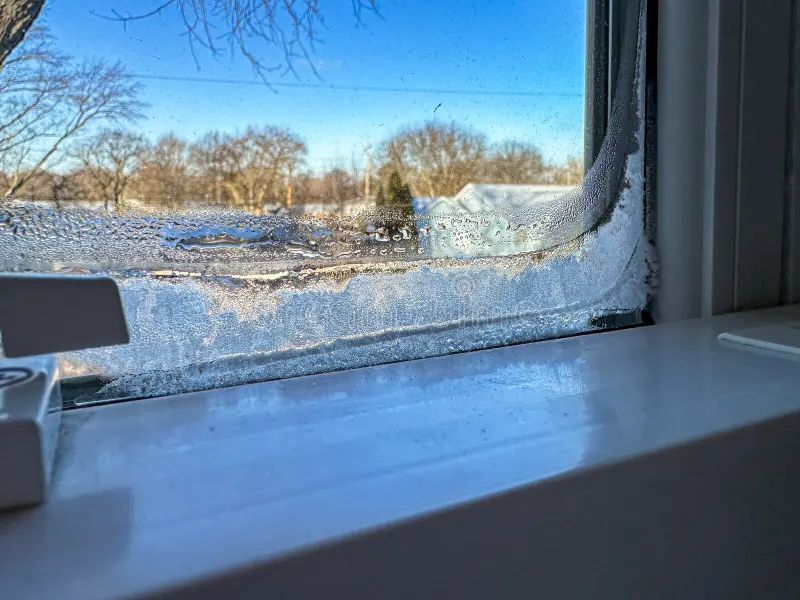
- Triple glazing stays clear at centre but frosts at edges.
- Condensation appears before ice.
Within the diagnostic path for Frost Forming Inside Windows at -20 C: Set Humidity by Weather, use location and timing to distinguish how to prevent frost on inside of house windows from between-pane moisture, uncontrolled air leakage, or a room-specific airflow problem.
Practical response
- Measure humidity with a reliable hygrometer.
- Reduce humidifier output before the coldest night.
- Use source exhaust and balanced ventilation.
- Keep air moving over the glass.
- Increase humidity again cautiously when weather moderates.
Illustrative scenario
Illustrative scenario: triple-glazed units stay clear at -10 C but develop a narrow lower-edge frost band at -23 C while indoor RH remains 42 percent. A weather-responsive humidity reduction is tested before product service.
What not to assume
Health Canada’s broad 30-50 percent indoor range supports health and moisture control, but the building envelope may require a lower winter level during severe cold. Avoid quoting the general range as a guarantee against window condensation.
When professional help makes sense
Get ventilation advice if humidity cannot be controlled without comfort problems. Request window review when a single unit performs much worse, seals are damaged, or frost tracks an obvious air leak. For a review centred on Frost Forming Inside Windows at -20 C: Set Humidity by Weather, bring photos and measurements plus the reference steps for ice buildup on windows; the visit can then begin with evidence rather than a generic replacement assumption.
Frequently asked questions
Is 30 percent RH always safe at -20 C?
Not for every product or installation. Use window-specific performance, room temperature, and observed condensation.
Can humidity be too low?
Yes. Over-drying can cause discomfort and material effects. Make measured, temporary adjustments and restore levels when weather changes.
Does edge frost mean triple glazing failed?
Not by itself. Edges are colder than the centre; compare severity, humidity, ratings, and similar units.
Suggested internal links
Triple Glazed Windows
Energy-Efficient Window Ratings
Authoritative sources
Natural Resources Canada – Condensation
Natural Resources Canada – Keeping the Heat In, Section 9
Health Canada – Guide to addressing moisture and mould indoors