
Why New Blinds Can Trigger Ice on the Inside of a Window
New blinds can create a colder pocket at the glass by blocking room heat. If moisture is present, condensation and ice may appear behind the covering even though the window and room have not otherwise changed.
Alongside the specific checks in Why New Blinds Can Trigger Ice on the Inside of a Window, review frost on inside of windows and compare that guidance with measured conditions in this home.
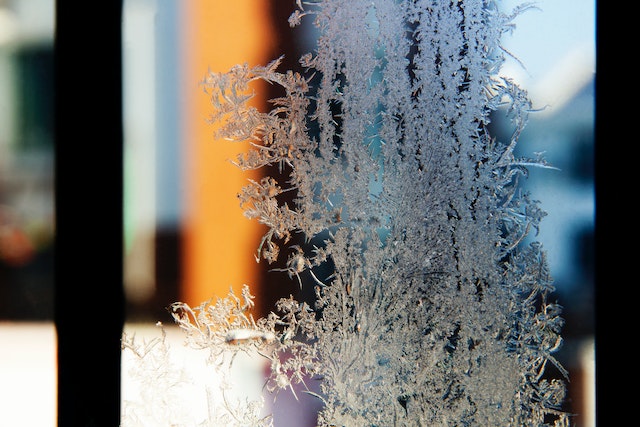
Why the frost pattern matters
A frost complaint becomes manageable once its variables are named. A window is often the first visible surface to report excess winter moisture because it is colder than surrounding finishes. The window may be sound, defective, or simply operating at a difficult temperature-humidity combination. The pattern and comparison with nearby units decide which explanation deserves attention first.
Do not turn 30 to 50 percent relative humidity into a fixed winter rule. It is Health Canada’s broad indoor range, not a promise that every Canadian window will remain dry. As the exterior temperature falls, Natural Resources Canada indicates that the condensation-safe indoor level can fall as well.
Evidence to collect:
- Ice began after covering installation.
- Frost follows blind edges or side channels.
- Glass clears when the blind stays raised.
- The heat source sits below the blocked opening.
Within the diagnostic path for Why New Blinds Can Trigger Ice on the Inside of a Window, use location and timing to distinguish preventing frost on indoor windows from between-pane moisture, uncontrolled air leakage, or a room-specific airflow problem.
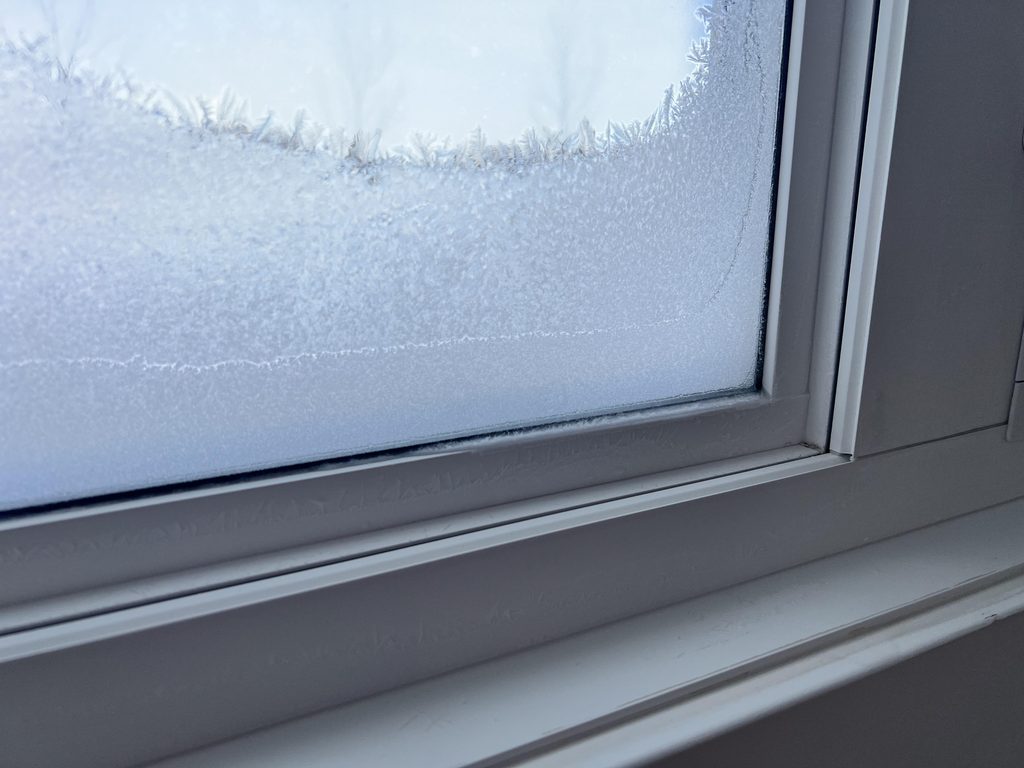
Practical response
- Photograph the covering and frost together.
- Check manufacturer clearance and operating guidance.
- Raise or tilt the blind for controlled airflow.
- Keep heat sources unobstructed.
- Compare humidity during the test.
Illustrative scenario
Illustrative scenario: a cellular shade with tight side tracks is installed on a north-facing window. Within a week, frost appears behind it while adjacent uncovered units stay clear. The covering changes the microclimate at the glass and becomes the first test variable.
What not to assume
Do not drill holes, cut side channels, or place heaters against the covering without manufacturer approval. A safe airflow test is reversible and provides better evidence than an improvised permanent modification.
When professional help makes sense
Consult the covering supplier if the product traps condensation despite correct use, and a window specialist if frost continues with the covering open or the sash shows leakage, damage, or poor operation. For a review centred on Why New Blinds Can Trigger Ice on the Inside of a Window, bring photos and measurements plus the reference steps for ice inside double-glazed windows; the visit can then begin with evidence rather than a generic replacement assumption.
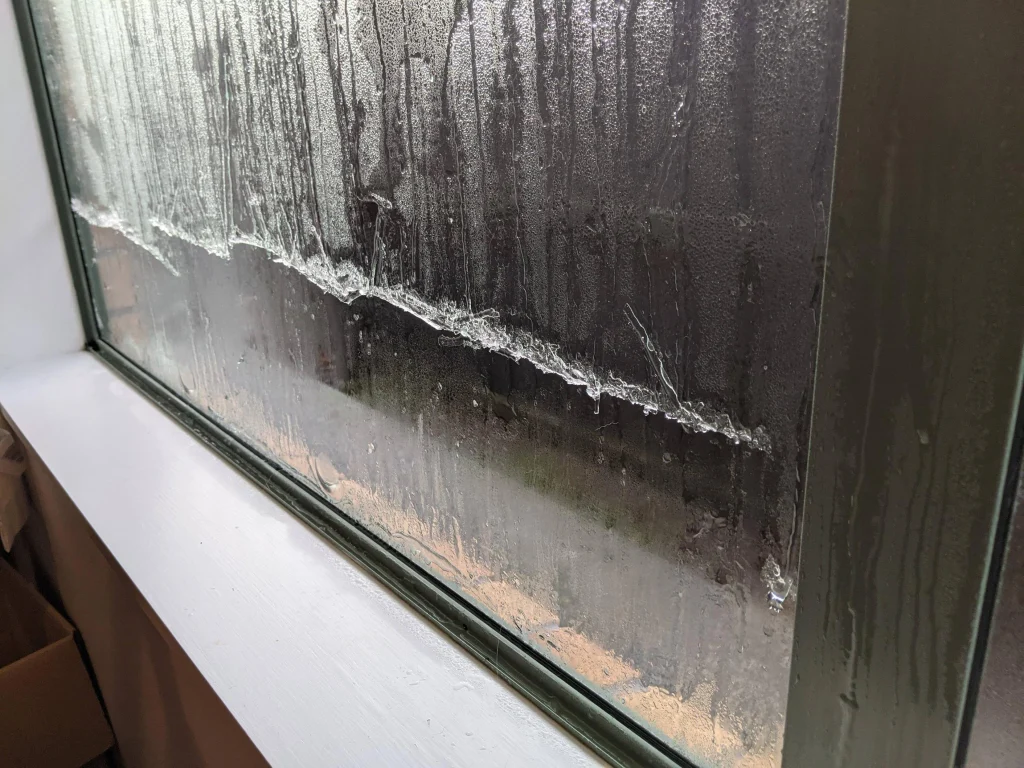
Frequently asked questions
Do cellular shades cause window ice?
They can contribute by reducing warm airflow at the glass, especially when indoor humidity is high and outdoor weather is severe.
Should side channels be removed?
Only if the manufacturer approves. Start with reversible operating changes.
Can a high-performance window still frost behind blinds?
Yes. Even efficient glass can cool enough behind a tight covering for moisture to condense at edges.
Suggested internal links
Maintain and Clean Your Windows
Energy-Efficient Window Ratings
Authoritative sources
Natural Resources Canada – Condensation
Health Canada – Ventilation and the indoor environment
Health Canada – Guide to addressing moisture and mould indoors